“…cut me some slack, who do you want me to be?
’Cause I’m too messy, and then I’m too f’n clean
You told me, ‘Get a job’, then you ask where the hell I’ve been
And I’m too perfect ’til I open my big mouth
I want to be me, is that not allowed?”
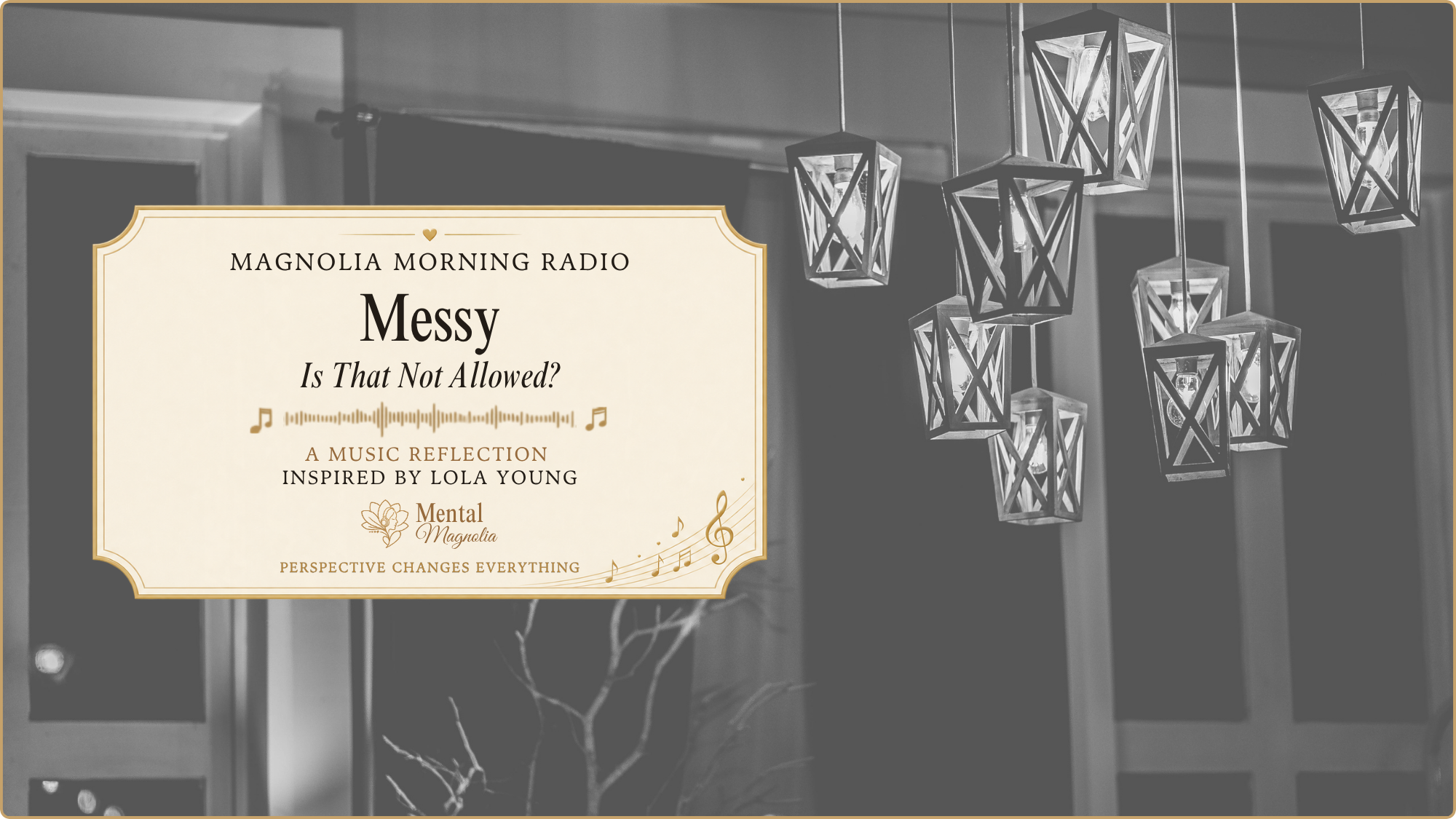
~ “Messy” by Lola Young
Now Playing
Song: “Messy”
Artist: Lola Young
Watch, then come back.
There may be no faster way to make yourself crazy than trying to become whatever version of you will finally satisfy everybody. Be responsible, but don’t work so much. Speak your mind, but don’t make anyone uncomfortable. Be confident, but not arrogant. Be independent, but don’t make people feel unnecessary. Take care of yourself, but don’t be selfish. Be honest, but perhaps not that honest.
Be yourself.
No, not like that. 😂
That’s what makes the contradiction in Lola Young’s “Messy” hit so hard. The standard keeps moving. You can clean yourself up, soften the edges, say the right things, make the responsible choice, try harder, tone yourself down, build yourself up, and somehow still discover that somebody preferred yesterday’s version.
After a while, it raises an uncomfortable question: Who exactly am I trying to be?
And maybe an even more uncomfortable one: How much of the person I show the world is actually me?
Oscar Wilde wrote in De Profundis:
“Most people are other people. Their thoughts are someone else’s opinions, their lives a mimicry, their passions a quotation.”
That sounds harsh until you think about how naturally it happens. We learn very early which versions of ourselves receive approval. Maybe the quiet version gets praised for being “easy.” The helpful version is loved for always being available. The funny version can keep everyone from noticing that something hurts. The strong version doesn’t need anything. The agreeable version keeps the peace. The successful version proves something.
So we adapt. And adaptation itself isn’t a bad thing.
We all wear different versions of ourselves in different rooms. You probably shouldn’t interact with your boss in exactly the same way you interact with the friend who’s seen you in sweatpants, eating cereal straight from the box at midnight. Social filters exist for a reason.
For example, a mask isn’t automatically a lie. Sometimes it’s professionalism. Sometimes it’s privacy. Sometimes it’s protection. Sometimes it’s simply knowing that not every part of you belongs in every room.
The problem begins when we wear a mask for so long that we stop remembering there’s a face underneath it. Or when we begin dividing ourselves into the parts that are acceptable and the parts that need to stay hidden.
October is the month when we deliberately put monsters on our porches, skeletons in our yards, ghosts in our windows, and masks on our faces. So maybe it’s also a good time to look at some of the things we hide from not only others, but also ourselves. Not because there’s necessarily anything sinister lurking in there, but because somewhere along the way, most of us have decided that certain parts of ourselves are a little too messy to leave out where people can see them.
Like the anger. The jealousy. The need for attention. The insecurity. The ambition. The resentment. The desire to be liked. The part that wants to say no. The part that wants somebody else to take care of things for once. The part that occasionally thinks something spectacularly petty and then immediately looks around internally as if to ask, “Who said that?” 👀😂
Carl Jung used the idea of the shadow to describe aspects of ourselves we reject, repress, or don’t consciously identify with. And despite the wonderfully spooky name, the shadow isn’t necessarily some evil creature living in the basement of our personality. Sometimes it contains things we genuinely need to work on.
Sometimes, though, it contains perfectly human parts of ourselves that we learned weren’t acceptable. For instance, perhaps you learned anger was ugly, so you buried it. Maybe you learned confidence was arrogance or wanting recognition felt vain. You might have decided needing help felt weak or saying no felt selfish. Maybe being different threatened your sense of belonging. So you put those things behind the mask.
That’s why I think the question in this week’s song matters so much: “I want to be me, is that not allowed?” Because being yourself doesn’t mean every impulse gets a free pass. It doesn’t mean refusing to grow. It doesn’t mean hurting people and announcing, “Well, that’s just who I am.”
Sometimes growth means looking at something in ourselves and saying, I don’t like what this is doing, and I want to change it. But we can’t make thoughtful choices about parts of ourselves we refuse to admit exist. We also can’t know whether something truly needs changing until we’re willing to look at it without immediately declaring it monstrous.
That’s the invitation I’m offering. Not to tear off every mask. Not to drag every skeleton out of every closet. Not to spend thirty-one days psychologically excavating ourselves until Halloween becomes a blessed relief. Just to become a little more curious about what we hide. To notice when we’re changing shape to meet someone else’s expectations. To wonder whether the thing we’ve been trying so hard to conceal is actually something terrible…
…or simply something human.
Maybe the goal was never to become less messy. Maybe it’s learning which parts of the mess are ours, which parts were handed to us by other people, and which parts we’re finally ready to stop being ashamed of.