Who are you willing to stand beside, and who have you allowed to stand beside you?
There’s a particular kind of strength in knowing how to stand beside someone.
To stay when things are difficult. To notice what they need before they have to explain it. To learn the small details that make something easier, safer, calmer, or simply more bearable. To know when to step closer, when to listen, when to stay quiet, and sometimes when something is wrong even when they insist they’re fine.
To say, in one way or another, “I’m here.”
Many caregivers become very good at this. So do parents, partners, friends, adult children, the dependable ones, the people everyone calls when something has gone sideways.
Sometimes caring for someone becomes such a familiar part of who we are that standing beside them no longer feels like a decision. It’s simply what we do. What can be much harder is letting someone stand beside us.
That’s one of the things I hear in The Pretenders’ I’ll Stand By You.
Now Playing
Song: “I’ll Stand By You”
Artist: The Pretenders
Listen first, then come back and look again.
Official video:
It’s not only the promise in the title that gets to me.
It’s the invitation underneath it:
“Don’t be ashamed to cry.
Let me see you through.”
There’s something vulnerable in that little word let.
Let me.
Not “I’ll take over.”
Not “I know how to fix this.”
Not even “I can make this better.”
Let me see you through.
There are two people in that sentence. One who’s willing to stand there. And one who has to allow them close enough to do it.
That second part can be harder than it sounds, especially when you’ve spent a long time being the person who knows what needs to happen. You become good at noticing. Good at anticipating. Good at carrying information no one else knows needs to be remembered. Good at recognizing the slight change in a voice, an expression, a routine, a behavior. Good at knowing which details matter and which ones don’t. And somewhere along the way, competence can become its own little trap. Because when you’ve been the one who knows for long enough, letting someone else help isn’t always as simple as handing them part of the load. Sometimes they don’t know how to carry it.
That’s one of the uncomfortable truths hiding underneath all the advice telling people to “ask for help.” Sometimes we have asked. Someone genuinely wanted to help but didn’t understand what was needed. Someone offered to take over a task, but explaining and supervising it required more energy than just doing it ourselves. Someone could perform the task but couldn’t replace the knowledge, familiarity, or relationship behind it. Someone promised to help and didn’t follow through. Sometimes we reached out and got silence. Those experiences teach us things.
After enough of them, “I’ll just do it myself” can begin to sound less like stubbornness and more like history. Not because we believe we’re the only competent person on Earth. Not because we secretly enjoy doing everything. And not always because we’re unwilling to give up control.
Sometimes we’ve simply learned that depending on someone else comes with risk. So we adjust. We stop asking quite as often. We figure something else out. We make ourselves need less. We add one more thing to the list of things we know how to handle.
And after a while, we may not even notice we’re doing it anymore. Until someone really does try to help. Then out come the reflexes.
“You don’t have to do that.”
“I’m fine.”
“Really, it’s okay.”
“I can get it.”
“I’ll make it up to you.”
“I’m sorry.”
That last one is strange when you think about it. Someone offers us care, and our first instinct is sometimes to apologize for requiring it. As though receiving something creates a debt. As though another person’s effort becomes evidence that we’ve asked too much. As though the care we give freely somehow follows different rules when it starts moving in our direction.
But there’s another truth here, too. The people around us can’t always know how to help. They may love us deeply and still not understand the world we’re living in. They may be standing outside something complicated with no idea where the door is. They may be afraid of doing the wrong thing, saying the wrong thing, making something harder, or stepping into a situation they don’t understand.
Perhaps sometimes support begins before anyone knows exactly what to do. Maybe it starts with being willing to stay long enough to learn. With listening instead of immediately solving. With believing someone when they tell us what’s difficult. With respecting the knowledge they already have. With accepting that we may never fully understand their experience and refusing to let that become an excuse for keeping our distance.
There are burdens another person sincerely can’t take from us. There are responsibilities they truly cannot assume. There are relationships they have no way to duplicate. There are things only we may know how to do. But standing beside someone doesn’t always require taking the thing out of their hands.
Sometimes support means recognizing the person whose hands are full. Sometimes it means asking, “What would actually help?” and listening to the answer. Sometimes it means trying again when the first offer doesn’t fit. Sometimes it means taking care of one small piece that can be shared. Sometimes it means noticing the person who is always doing the noticing.
Sometimes it means being willing to say, “I don’t completely understand this, but I want to.”
That changes the meaning of support for me. Because maybe receiving help doesn’t always begin with learning how to hand over the load. Maybe it begins with believing that someone can stand close to us without needing to take it. And maybe offering help doesn’t always begin with knowing exactly what another person needs. Maybe it begins with being willing to admit that we don’t know yet.
There’s vulnerability on both sides of that.
One person saying:
I don’t completely understand, but I want to.
And another saying:
Okay. You can come a little closer.
That feels much more honest than simply telling people they need to ask for help.
Sometimes asking is hard because we’ve forgotten how. Sometimes receiving is hard because it has become almost instinctive to refuse. And sometimes we’re careful because experience has taught us that not every offer of help is actually helpful. All of those things can be true at the same time.
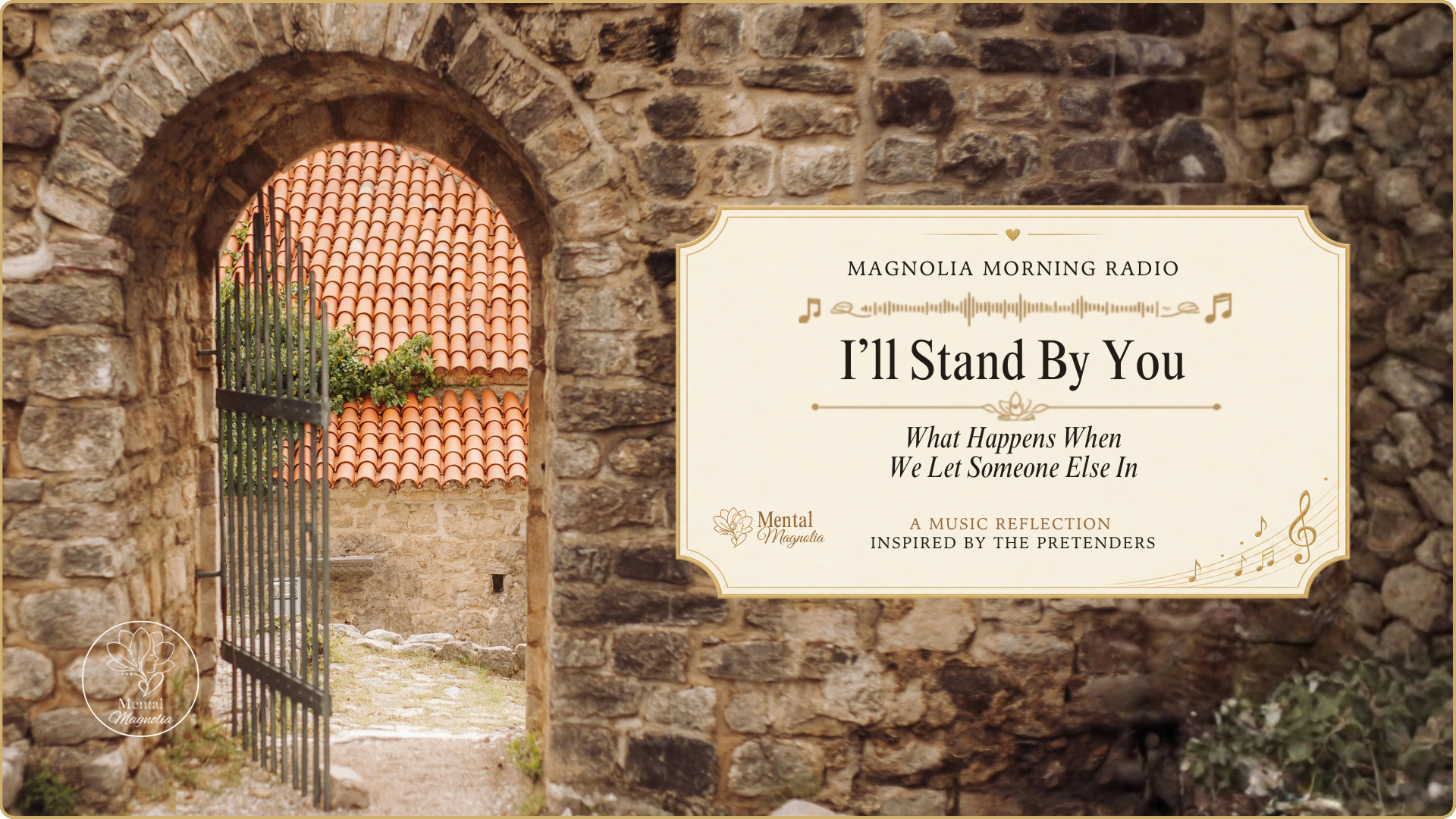
So perhaps the answer isn’t to tear down every wall we’ve built. Some of those walls have protected important things. Boundaries matter. Trust matters. Perhaps we only need to leave a gate. An opening for the people who have shown that they’re willing to listen, learn, stay, and respect what they don’t yet understand.
And perhaps the people standing outside that gate have some responsibility, too.
Instead of asking only: Why won’t they let me help?
Maybe we also need to ask:
Have I shown them that my help is something they can safely let in?
Have I listened before deciding what they need?
Have I stayed after the first offer?
Have I respected what they already know?
Have I been willing to learn?
Have I made room for the possibility that helping may look different from what I imagined?
Being invited through the gate isn’t permission to come in and rearrange everything. It’s an invitation to listen. To learn. To stay. To participate. To stand beside.
Maybe that’s what I hear differently in this song now. Not a promise to rescue someone from the dark, but a willingness to enter it with them.
Not: Give me what you’re carrying.
But: You don’t have to hide how heavy it is from me.
Not: I know exactly what you need.
But: I’m willing to try to understand.
Not: I can fix this.
But simply: I can stay.
Because support isn’t always one person handing a burden to another. Sometimes the burden can’t be handed over. Sometimes the most meaningful change is simply that there are now two people standing in the same place.
One willing to come closer.
One willing to let them.
Maybe strength was never supposed to mean standing alone.
Maybe sometimes the bravest thing one person can say is, “I’ll stand by you.”
And the bravest thing the other can answer is, “Okay.”