“Attention is the beginning of devotion.”
— Mary Oliver
I keep coming back to that sentence. Devotion sounds like such a big word. We associate it with faith, prayer, commitment, love, worship, service. Things we deliberately give ourselves to. But Mary Oliver begins somewhere much smaller. Attention. Before devotion, notice. Before meaning, notice. Before gratitude, wonder, connection, maybe even restoration… notice.
That idea appears in some form across spiritual traditions that otherwise understand God, humanity, suffering, and the purpose of life very differently. In the Gospel of Matthew, Jesus tells the people listening to him:
“Consider the lilies of the field, how they grow.”
Matthew 6:28
Consider them. Not accomplish something with them. Not improve them. Not rush past them on the way to something more important. Look.
In the Qur’an, we find another kind of attention:
“Surely in the remembrance of Allah do hearts find comfort.”
Qur’an 13:28
Here, the heart finds rest through remembrance. Attention is intentionally turned toward God, and something inside settles.
The Bhagavad Gita describes the restless mind wandering away and instructs the practitioner to:
“bring it back and continually focus it on God.”
Bhagavad Gita 6:26
Again – return. When the mind wanders, bring it back.
The Buddhist Dhammapada places enormous importance on that same quality of awareness:
“Heedfulness is the path to the Deathless.”
Dhammapada 21
And centuries later, Buddhist teacher Thich Nhat Hanh put it beautifully:
“The present moment is filled with joy and happiness. If you are attentive, you will see it.”
Different beliefs. Different understandings of what we are attending to and why it matters. But there is a thread running through them:
Consider.
Remember.
Return.
Be attentive.
Maybe that’s worth noticing too.
We spend so much of our lives moving through ordinary moments while our attention is somewhere else. We eat while scrolling. We drive while replaying a conversation. We listen while preparing what we’re going to say next. We walk outside while thinking about everything waiting for us when we get back inside.
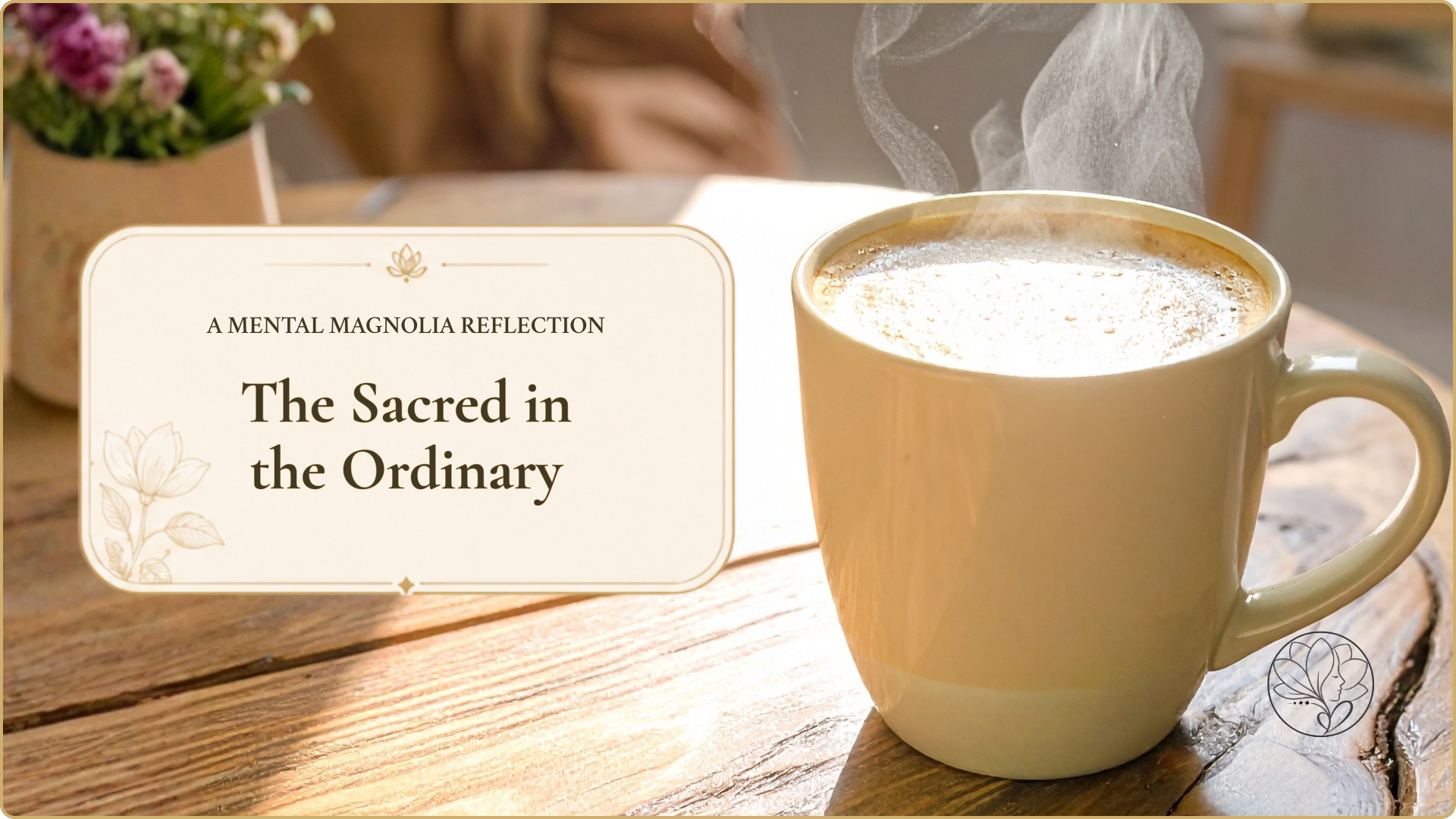
Even beautiful things can become scenery when we see them often enough. The sunlight through a window. A favorite song. Someone we love laughing in another room. The smell of coffee. A tree we’ve passed a thousand times. The sound of rain. Our own breathing. None of those things suddenly becomes important because we notice it. Maybe attention simply allows us to recognize the importance that was already there.
I wonder if that’s part of why certain things restore us. Maybe the walk doesn’t replenish us only because we moved our bodies. Maybe part of it is that, for twenty minutes, we noticed the sky. Maybe music restores us because for four minutes we stop thinking about everything else and actually listen. Maybe prayer, meditation, gardening, cooking, painting, sitting beside the ocean, laughing with someone we love, or staring into a campfire can return something to us because they gather our scattered attention and bring us fully into one place.
Not every restorative moment needs to transport us somewhere else. Sometimes it brings us more completely into where we already are. That feels especially important in a world built to compete for every available piece of our attention. Attention has become valuable enough that entire industries fight over it. But we still get to decide, at least sometimes, where we place it.
Perhaps what we repeatedly give our attention to becomes part of what shapes our experience of being alive.
That doesn’t mean every ordinary moment needs to become profound. Sometimes coffee is just coffee. 😄 Sometimes a walk is just getting the dog around the block. And paying attention doesn’t erase grief, exhaustion, fear, responsibility, or whatever else we may be carrying.
But every once in a while, when we notice – really notice – something shifts. Maybe the moment becomes sacred. Or maybe it was sacred all along, and for a little while, we were finally present enough to recognize it.
So perhaps restoration isn’t always something we need to go searching for. Some of it may already be here. Waiting in places so familiar that we’ve stopped seeing them.
This week, maybe give one ordinary thing your full attention. A person. A meal. A song. A tree. A prayer. The evening sky. Whatever asks you to stop being everywhere else for a moment and simply be here. Then notice what happens.
Because maybe Mary Oliver was onto something.
Attention may be where devotion begins.
And perhaps it’s also where some forms of restoration begin.
What becomes sacred when you give it your full attention?